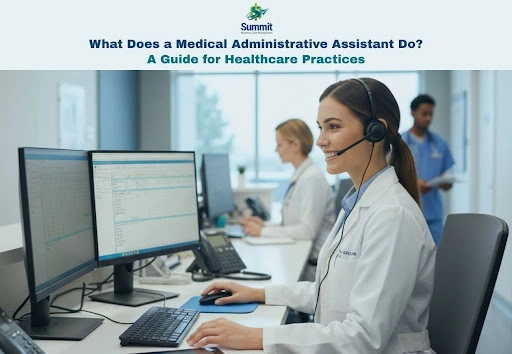
A medical administrative assistant manages the core administrative and front-office functions
that keep healthcare facilities organized and running efficiently. Their primary focus is on
scheduling patients, maintaining accurate medical records, supporting billing and insurance
processes, and ensuring clear communication across the practice. By handling these
responsibilities, they allow physicians and clinical staff to focus on delivering patient care.
Understanding what a medical administrative assistant does helps healthcare leaders make informed
staffing decisions that support operational efficiency, compliance, and patient satisfaction.
This guide helps healthcare organizations understand the responsibilities, skills, and value of
medical administrative assistants within modern care teams.
What Is a Medical Administrative Assistant?
A medical administrative assistant is a healthcare professional responsible for managing the
non-clinical, administrative functions of a medical practice or healthcare organization. Unlike
clinical medical assistants, this role does not involve direct patient care such as taking
vitals or assisting with procedures. Instead, healthcare administrative assistants focus on the
operational backbone of healthcare delivery.
They serve as the organizational link between patients, providers, insurance companies, and
internal staff. Their work ensures that appointments run smoothly, records remain accurate and
compliant, billing processes are efficient, and communication flows without disruption.
Medical administrative assistants are commonly found in:
- Private medical practices
- Group clinics
- Hospitals and outpatient facilities
- Specialty practices (cardiology, dermatology, mental health, etc.)
- Urgent care centers
- Telehealth and hybrid healthcare organizations
For healthcare organizations, this role is not simply clerical; it is operationally strategic.
What Does a Medical Administrative Assistant Do? Core Responsibilities Explained
While responsibilities can vary by organization size and specialty, most medical admin assistants
handle a defined set of critical functions that keep healthcare operations running smoothly.
1. Patient Intake, Scheduling, and Front-Office Operations
Medical administrative assistants often serve as the first point of contact for patients. This
role directly influences patient satisfaction, retention, and trust.
Key responsibilities include:
- Scheduling, confirming, and rescheduling appointments
- Managing provider calendars to maximize efficiency
- Coordinating follow-up visits and referrals
- Handling phone calls, emails, and patient inquiries
- Managing check-in and check-out processes
- Ensuring a professional and organized front-office environment
Efficient scheduling and communication reduce wait times, prevent double bookings, and improve
overall patient flow.
2. Medical Records and Documentation Management
Accurate documentation is a legal, operational, and clinical necessity. Medical administrative
assistants play a critical role in maintaining organized, compliant patient records.
Their responsibilities typically include:
- Creating, updating, and maintaining electronic health records (EHRs)
- Ensuring accuracy and completeness of patient information
- Managing referrals, authorizations, and supporting documentation
- Maintaining strict HIPAA compliance and data confidentiality
- Coordinating records between providers, labs, and specialists
Disorganized or inaccurate records increase compliance risk and disrupt continuity of care.
Medical administrative assistants help prevent these issues.
3. Billing, Insurance, and Revenue Cycle Support
Administrative inefficiencies often result in delayed payments, denied claims, and patient
dissatisfaction. Medical administrative assistants support the financial health of the
organization by assisting with revenue cycle operations.
Common responsibilities include:
- Verifying insurance eligibility and coverage
- Collecting and documenting patient insurance information
- Assisting with medical billing and claims processing
- Communicating with insurance providers
- Addressing patient billing questions
- Reducing errors that lead to claim denials
While they may not replace dedicated billing specialists, medical administrative assistants
significantly improve billing accuracy and cash flow.
4. Office Administration and Operational Coordination
Beyond patient-facing and financial tasks, medical office assistants ensure daily operations run
efficiently.
Their duties may include:
- Coordinating schedules between providers and departments
- Ordering medical and office supplies
- Managing correspondence and internal communication
- Supporting accreditation, audits, and compliance documentation
- Assisting leadership with administrative reporting
- Improving workflow efficiency across the practice
These responsibilities allow providers and clinical staff to focus on patient care rather than
administrative distractions.
How Medical Administrative Assistants Add Value to Healthcare Organizations
From a business perspective, clinical administrative assistants deliver measurable value across
multiple areas of healthcare operations.
Improving Provider Productivity
By offloading administrative tasks, providers can focus more time on patient care, increasing
appointment capacity and reducing burnout.
Enhancing Patient Experience
Professional communication, organized scheduling, and efficient front-office operations improve
patient satisfaction and retention.
Supporting Compliance and Risk Management
Accurate records and proper documentation reduce legal and regulatory risks.
Strengthening Revenue Cycle Performance
Insurance verification and billing support help minimize claim denials and payment delays.
Enabling Practice Growth
As patient volume increases, medical admin assistants help practices scale without overwhelming
providers.
This role is best viewed as an investment in operational stability, not an overhead expense.
When Should a Medical Practice Hire a Medical Administrative Assistant?
Many healthcare organizations wait too long to address administrative overload. Recognizing the
right time to hire a medical administrative assistant can prevent workflow disruptions, revenue
loss, and declining patient satisfaction.
The following indicators signal when additional administrative support is needed.
1. Providers Are Spending Too Much Time on Administrative Work
When physicians or clinical staff are managing scheduling, insurance questions, or documentation,
valuable clinical time is lost. This often leads to reduced appointment availability, increased
burnout, and lower overall productivity.
2. Scheduling and Patient Flow Are Inefficient
Frequent appointment errors, long patient wait times, double bookings, or missed follow-ups
suggest that scheduling processes are no longer manageable. Inefficient patient flow can disrupt
care delivery and negatively affect the patient experience.
3. Billing Errors or Insurance Delays Are Increasing
Rising claim denials, delayed reimbursements, or unresolved insurance issues typically point to
gaps in administrative oversight. These issues can directly impact cash flow and increase
administrative rework.
4. Patient Satisfaction Is Declining
Missed calls, delayed responses, or front-desk confusion often lead to patient frustration. Since
administrative staff are often the first point of contact, these issues can quickly affect
patient trust and retention.
5. Records and Compliance Are Becoming Difficult to Manage
Disorganized medical records, incomplete documentation, or inconsistent data entry increase
compliance risks and operational stress, particularly in regulated healthcare environments.
Organizations That Benefit Most
- Growing private practices managing increased patient volume
- Multi-provider clinics requiring coordinated scheduling and communication
- Specialty healthcare services with complex documentation needs
- Outpatient and urgent care centers with high daily patient turnover
- Telehealth organizations supporting remote scheduling and billing
Hiring at the right time helps healthcare organizations address small inefficiencies before they
become costly operational problems.
To better understand how outsourced medical support can improve financial performance, practices
can review the key
benefits of hiring a medical billing company.
Skills and Qualifications Healthcare Employers Should Look For
Hiring the right medical administrative assistant requires more than general office
experience. Healthcare organizations should seek candidates with specialized skills suited
to medical environments.
Technical and Administrative Skills
- Knowledge of medical terminology
- Experience with EHR and practice management systems
- Familiarity with insurance verification and billing processes
- Strong data entry and documentation accuracy
- Scheduling and calendar management expertise
Communication and Professional Skills
- Clear and professional patient communication
- Ability to handle sensitive situations calmly
- Strong organizational and multitasking abilities
- Collaboration with providers, nurses, and administrative staff
Compliance and Risk Awareness
- Understanding of HIPAA and patient privacy laws
- Attention to detail to prevent documentation errors
- Ethical handling of confidential information
These skills have a direct impact on compliance, efficiency, and patient experience.
Education and Training Requirements
- High school diploma or equivalent (minimum requirement)
- Postsecondary education preferred, such as:
- Certificate programs in medical administration or medical office management
- Associate degree programs in healthcare or medical administration
- Hands-on externships or internships are strongly valued
- Optional certifications may enhance qualifications, depending on organizational needs
How Medical Administrative Assistants Integrate into Healthcare Teams
Medical office assistants, especially virtual medical assistants, work as a central support
function within healthcare teams, coordinating closely with both clinical and administrative
staff.
They regularly collaborate with:
- Physicians and advanced practice providers to manage schedules, documentation, and
patient coordination
- Nurses and clinical staff to support patient flow, records accuracy, and care continuity
- Billing and coding teams to ensure accurate insurance information and timely claims
processing
- Office managers and administrators to support daily operations, compliance, and workflow
efficiency
They act as a communication bridge, ensuring information flows smoothly between patients,
providers, and payers. Their role supports, rather than replaces, clinical staff, making
them essential for team-based care models.
For practices evaluating broader administrative support, it is also important to understand
the factors
to look for when choosing a medical billing company.
Common Misconceptions About Medical Administrative Assistants
“They’re just receptionists.”
Medical administrative assistants handle far more than front-desk duties. Their role
requires healthcare-specific knowledge, familiarity with medical systems, and an
understanding of compliance and documentation standards.
“Any administrative staff can do this role.”
Healthcare administration involves complex regulations, insurance processes, and strict
patient confidentiality requirements that general administrative staff may not be trained to
manage.
“The role doesn’t affect revenue or compliance.”
Administrative errors are a common source of claim denials, delayed payments, and compliance
risks. Skilled medical administrative assistants help protect both financial performance and
regulatory standing.
Understanding the full scope of this role allows healthcare organizations to staff more
strategically and operate more effectively.
Partner with Summit RCM for Smarter Administrative Solutions
Medical administrative assistants are essential to efficient, compliant healthcare
operations. By managing scheduling, documentation, billing support, and communication, they
reduce administrative strain and allow providers to focus on patient care.
For practices seeking a flexible and cost-effective solution, Summit RCM’s virtual medical
assistant services provide experienced administrative support without the overhead
of
in-house staffing.
Contact Summit RCM to learn how our virtual medical assistants can help streamline your
operations and support your practice’s growth.
.png)