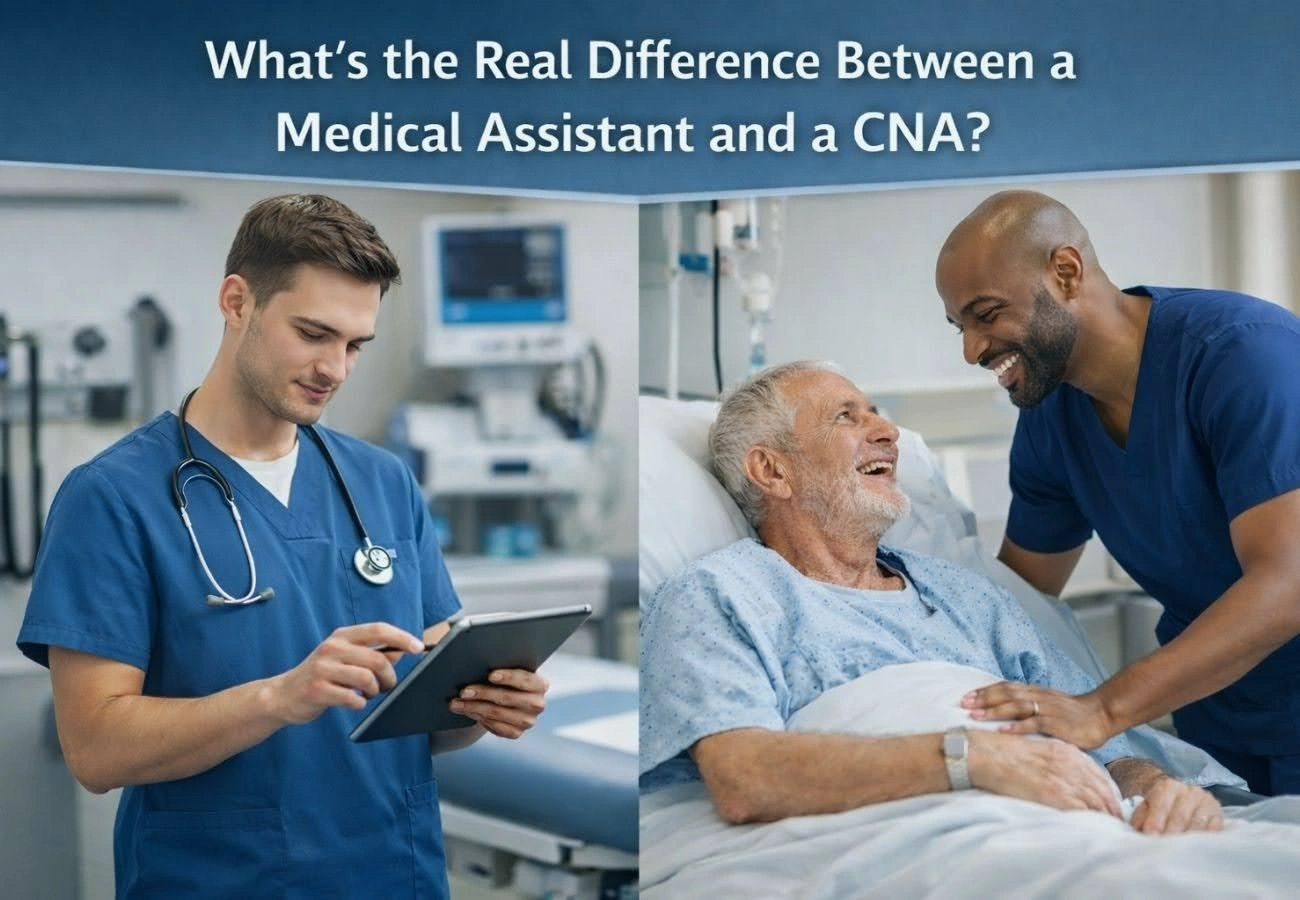
Medical Assistants (MAs) and Certified Nursing Assistants (CNAs) stand out as two of the most
essential roles on the care team. Though their titles may sound similar, their responsibilities,
training, and career paths are distinctly different.
Both professions are essential to the healthcare system, collaborating closely with doctors,
nurses, and patients to ensure the highest quality of care.
This article provides an in-depth look at the key differences between Medical Assistants and
CNAs, exploring their duties, work environments, required training, and long-term career
outlook.
What Is a Medical Assistant?
A Medical Assistant is a versatile healthcare professional who performs both administrative
and clinical duties. They are often found in outpatient clinics, physician offices, and
ambulatory care centers. Their work ensures that healthcare facilities run smoothly by
bridging the gap between patient care and office management.
Medical Assistants greet patients, record their health information, prepare them for exams,
assist with procedures, and handle tasks like scheduling appointments or managing billing.
In many settings, they are the first and last point of contact for patients, making strong
communication and organizational skills essential.
What Is a Certified Nursing Assistant (CNA)?
A Certified Nursing Assistant, sometimes called a nurse aide, focuses primarily on direct
patient care under the supervision of registered nurses (RNs) or licensed practical nurses
(LPNs). CNAs work closely with patients who need daily living assistance and help maintain
their comfort and dignity.
Their duties often include helping patients bathe, dress, eat, and move around. They also
take vital signs, report changes in a patient’s condition, and provide emotional support to
patients and families. CNAs are especially critical in long-term care facilities, nursing
homes, and hospitals, where they spend more time with patients than almost anyone else on
the healthcare team.
Education and Training Requirements
One of the most significant differences between these two professions lies in the education
and training needed to enter the field.
How to Become a Medical Assistant
To become a Medical Assistant, individuals typically complete a postsecondary certificate or
diploma program that lasts between 9 months and 2 years. Some pursue an associate degree,
which can open additional opportunities for advancement.
Training programs for MAs cover both clinical and administrative subjects, including:
- Medical terminology and anatomy
- Basic clinical procedures and laboratory techniques
- Electronic health record (EHR) management
- Medical billing, coding, and insurance processing
- Pharmacology and medication administration
- Patient communication and professional ethics
After completing their program, many Medical Assistants pursue voluntary certification to
enhance their employability. The most recognized credentials include:
- Certified Medical Assistant (CMA) through the American Association of Medical Assistants
- Registered Medical Assistant (RMA) through the American Medical Technologists
- National Certified Medical Assistant (NCMA) through the National Center for Competency
Testing
Certification is not legally required in most states, but employers increasingly prefer or
require it.
How to Become a Certified Nursing Assistant
The path to becoming a CNA is shorter and more focused on hands-on patient care. Training
programs, which are often offered by community colleges, technical schools, and healthcare
facilities, typically take 4 to 12 weeks to complete.
CNA coursework includes:
- Basic nursing skills
- Patient safety and infection control
- Communication techniques
- Vital signs monitoring
- Personal care and hygiene assistance
After completing an approved training program, aspiring CNAs must pass a state competency
exam, which includes both a written test and a practical skills evaluation. Once certified,
CNAs are listed on their state’s nurse aide registry and can legally work in healthcare
facilities.
Job Responsibilities
Although both roles involve patient interaction, the scope of their responsibilities differs
considerably.
Medical Assistant Duties
Medical Assistants handle a combination of clinical and administrative work, making them one
of the most flexible roles in healthcare. Their typical tasks include:
- Taking patient histories and vital signs
- Assisting physicians during exams and procedures
- Administering injections and preparing laboratory samples
- Updating patient records in electronic systems
- Managing appointment schedules and patient communications
- Coordinating insurance and billing information
Medical Assistants help ensure that healthcare providers can deliver care efficiently while
maintaining accurate records and a positive patient experience.
Certified Nursing Assistant Duties
CNAs focus almost entirely on direct patient care and support. Their daily work includes:
- Assisting patients with bathing, dressing, and grooming
- Helping patients move safely or transfer from beds to wheelchairs
- Monitoring and recording vital signs
- Reporting changes in a patient’s physical or emotional condition to nurses
- Serving meals and assisting with feeding when necessary
- Providing comfort, companionship, and reassurance
CNAs play a vital role in maintaining patient dignity and comfort, particularly for those
with limited mobility or chronic illness.
Work Environments
Medical Assistants and CNAs often work in very different healthcare settings.
Where Medical Assistants Work
Medical Assistants are most commonly employed in outpatient or ambulatory care settings,
such as:
- Primary care and family medicine clinics
- Specialty offices like cardiology or dermatology
- Urgent care centers
- Outpatient surgical clinics
Their schedules are typically more predictable, with regular weekday hours and fewer
overnight or weekend shifts.
Where CNAs Work
CNAs are essential in inpatient care environments, where patients require continuous
support. Common workplaces include:
- Hospitals
- Nursing homes
- Long-term care facilities
- Rehabilitation centers
- Assisted living communities
- Home healthcare settings
Because patient care is needed around the clock, CNAs often work evenings, weekends, and
holidays, sometimes on rotating shifts.
Skills and Personal Qualities
Both roles require strong interpersonal skills, attention to detail, and a genuine passion
for helping others. However, the specific skill sets differ slightly.
Skills for Medical Assistants
- Strong multitasking and organizational abilities
- Knowledge of medical office software and EHR systems
- Competence in clinical procedures
- Effective communication with both patients and providers
- Professionalism and confidentiality
Skills for Certified Nursing Assistants
- Compassion, patience, and emotional resilience
- Physical stamina for lifting and moving patients
- Keen observation and reporting skills
- Understanding of infection control and hygiene practices
- Teamwork and reliability
Salary and Job Outlook
Before choosing a healthcare career, it helps to know what you can expect in terms of
salary, job stability, and long-term growth.
Medical Assistant Salary and Demand
According to the United States Bureau of Labor Statistics (BLS), the median annual wage for
Medical Assistants is around $42,000, though this varies based on experience, certification,
and location. Those working in outpatient care centers or specialty practices tend to earn
higher salaries.
The job outlook is excellent, with employment projected to grow much faster than average in
the coming years. As healthcare continues to expand and adopt new technologies, the demand
for skilled Medical Assistants will remain strong.
Certified Nursing Assistant Salary and Demand
The median annual wage for CNAs is approximately $38,000, though this too depends on the
work setting and region. CNAs employed in government or hospital facilities generally earn
more than those in nursing homes or home health agencies.
Employment opportunities for CNAs are also expected to grow steadily, especially as the
population ages and long-term care needs increase. CNAs are essential in supporting the
daily well-being of older adults and individuals with chronic conditions.
Career Advancement Opportunities
Both Medical Assistants and CNAs have clear pathways for career growth within healthcare,
but they often lead in different directions.
Advancement for Medical Assistants
Medical Assistants can advance by gaining experience, pursuing certification, or continuing
their education. Many move into specialized roles such as:
- Clinical team lead or office manager
- Medical billing or coding specialist
- EHR specialist
- Health information manager
Some MAs choose to continue their studies to become registered nurses (RNs), physician
assistants (PAs), or healthcare administrators, using their clinical and administrative
background as a strong foundation.
Advancement for Certified Nursing Assistants
CNAs often use their experience as a stepping stone to higher levels of nursing. With
additional education, they can become:
- Licensed Practical Nurses (LPNs)
- Registered Nurses (RNs)
- Specialized caregivers in hospice or rehabilitation settings
Many CNAs develop a deep passion for hands-on care and find long-term fulfillment in working
directly with patients, while others pursue nursing degrees to expand their responsibilities
and earning potential.
Work-Life Balance and Job Satisfaction
In addition to salary and career prospects, overall work-life balance and job satisfaction
play a major role in determining how rewarding each profession can be.
Medical Assistants
Medical Assistants generally enjoy stable schedules and a balanced work-life dynamic,
especially those in clinics with regular hours. Their work environment is often structured
and fast-paced but less physically demanding than direct patient care roles.
Satisfaction among MAs often comes from building relationships with patients over time and
contributing to both the administrative and clinical success of a practice.
Certified Nursing Assistants
CNA work can be physically and emotionally demanding but also highly rewarding. They form
close relationships with patients and often become a source of comfort and companionship.
The ability to make a tangible difference in someone’s daily life gives many CNAs a deep
sense of purpose.
However, because of the physically intensive nature of the job and potential for irregular
hours, maintaining work-life balance can be more challenging for CNAs compared to MAs.
Medical Assistants and CNAs: Key Differences
Although both roles play vital parts in patient care, they differ significantly in their
responsibilities, education, and daily experiences. The table below provides a quick
comparison of their core differences.
| Aspect |
Medical Assistant (MA) |
Certified Nursing Assistant (CNA) |
| Primary Focus |
Clinical and administrative tasks |
Direct patient care |
| Work Setting |
Clinics, physician offices, outpatient centers |
Hospitals, nursing homes, long-term care |
| Training Duration |
9 months to 2 years |
4 to 12 weeks |
| Certification |
Optional, preferred by employers |
Mandatory state certification |
| Average Salary |
Around $42,000 annually |
Around $38,000 annually |
| Schedule |
Regular business hours |
Rotating shifts, nights, weekends possible |
| Physical Demands |
Moderate |
High |
| Career Path |
Administrative or clinical advancement |
Nursing or specialized patient care |
Selecting the right billing partner can make a significant difference in your practice’s
efficiency and profitability. Learn what truly matters in our detailed post on Factors
to Look for When Choosing a Medical Billing Company.
Which Career Path Is Right for You?
Choosing between becoming a Medical Assistant or a Certified Nursing Assistant depends on
your personal interests, strengths, and long-term goals.
If you enjoy variety, administrative work, and a structured schedule, the Medical Assistant
path may be a better fit. It allows you to work closely with physicians, learn about medical
procedures, and develop valuable skills that can lead to other healthcare careers.
If you are drawn to hands-on patient care, compassion-driven work, and the opportunity to
make a direct difference in people’s daily lives, becoming a Certified Nursing Assistant may
be more fulfilling. CNAs are at the heart of patient care and play an indispensable role in
ensuring comfort, safety, and dignity.
Both professions offer rewarding careers that serve as entry points into the broader world of
healthcare. Whether you see yourself coordinating patient records in a clinic or helping
someone recover in a hospital room, both paths lead toward meaningful service.
To learn more about how optimized financial processes can improve efficiency and revenue in
smaller clinics, read our article on How
Medical Billing Services Can Transform a
Small Practice.
Summit RCM: Commitment to Patient Care
Medical Assistants and Certified Nursing Assistants share a common goal of supporting patient
health and improving the quality of care, but they accomplish it in different ways. MAs
balance clinical and administrative duties, ensuring healthcare operations run efficiently,
while CNAs focus on direct patient care and daily support.
Both roles require compassion, professionalism, and commitment, and both offer valuable
experience for anyone considering a long-term career in healthcare. As the healthcare
industry continues to grow, demand for both Medical Assistants and CNAs will remain strong,
providing stable employment and opportunities for advancement.
At Summit RCM, we recognize the importance of every role that contributes to patient care.
Through our expertise in Healthcare Data Analytics,
healthcare staffing, training, and
documentation support, we help organizations build stronger, more efficient teams while
empowering professionals to reach their full potential.
As healthcare continues to evolve, Summit RCM remains dedicated to advancing excellence,
improving workflows, and supporting the individuals who make quality care possible. Because
behind every great healthcare team is a commitment to precision, compassion, and purpose,
the very values that drive everything we do at Summit RCM.
.png)