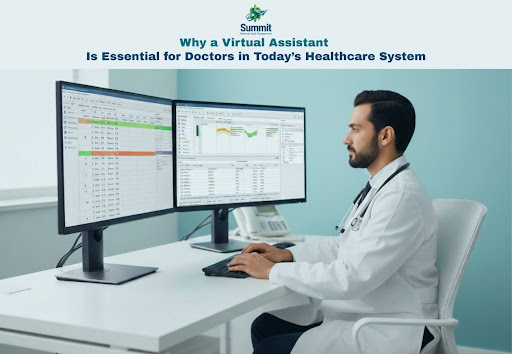
A virtual assistant is essential for a doctor's office because it addresses the critical problems of overwhelming administrative burdens, physician burnout, and rising operational costs, ultimately allowing doctors to focus on providing quality patient care.
Doctors today are under constant pressure to deliver high-quality patient care while managing an ever-growing list of administrative responsibilities. These challenges often divert doctors from patient care, leading to inefficiencies, stress, and lower patient satisfaction. By handling time-consuming tasks behind the scenes, virtual assistants allow physicians to focus on patient care, improve efficiency, and maintain a sustainable work-life balance.
This article explains why virtual assistants are now important for modern healthcare, the challenges they help solve, and the long-term benefits they bring to doctors, staff, and patients.
What Is a Virtual Assistant for a Doctor’s Office?
A virtual assistant for a doctor’s office is a remote, trained professional or AI-enabled service that handles administrative, operational, and communication tasks for medical practices. Unlike traditional staff, VAs work remotely, often across different time zones, and integrate seamlessly with existing systems.
Key Types of Medical Virtual Assistants:
- Administrative VAs – Scheduling, data entry, document management
- Medical VAs – Charting, transcription, EMR/EHR updates
- Front Desk VAs – Patient calls, appointment coordination, intake forms
- Billing and Coding VAs – Claims processing, payment follow-ups
- Customer Support VAs – Patient inquiries, reminders, follow-ups
These assistants are trained in healthcare workflows, HIPAA compliance, and medical terminology, making them reliable extensions of a practice’s internal team.
Why a Virtual Assistant Is Essential for Doctors
doctors face increasing demands that extend far beyond patient care. According to multiple studies, physicians can spend nearly half of their workday on administrative tasks, including charting, scheduling, insurance verification, billing inquiries, and patient communication. These growing pressures make it difficult for doctors to work efficiently without structured support. This is why a virtual assistant is essential for doctors in today’s healthcare environment.
A virtual assistant helps doctors regain control of their time, reduce stress, and improve the overall quality of care without adding unnecessary overhead or operational complexity.
The following are the key reasons a virtual assistant has become essential for doctors.
1. Reducing Administrative Overload That Takes Time Away from Patients
Administrative tasks consume a significant portion of a doctor’s workday. While necessary, they interfere with clinical focus and patient engagement. Virtual assistants take ownership of these responsibilities, allowing doctors to concentrate on medical decision-making.
A virtual assistant helps by:
- Managing appointment scheduling and calendar coordination
- Handling incoming calls and routine patient inquiries
- Organizing emails, messages, and patient communications
- Updating and maintaining patient records accurately
- Supporting documentation and administrative workflows
The result for doctors:
- More uninterrupted time with patients
- Fewer distractions during consultations
- Reduced after-hours paperwork
- Greater efficiency during clinic hours
2. Preventing Burnout and Supporting Physician Well-Being
Physician burnout is driven largely by excessive workload and constant multitasking. Long hours spent on administrative tasks increase fatigue and reduce job satisfaction.
Virtual assistants help reduce burnout by:
- Taking over repetitive and time-consuming tasks
- Minimizing daily administrative pressure
- Reducing the need for overtime and weekend work
- Creating more predictable and manageable schedules
Benefits for doctors include:
- Improved mental clarity and focus
- Better work-life balance
- Increased job satisfaction
- Long-term career sustainability
3. Improving Patient Communication Without Overloading Doctors
Timely and clear communication is essential to patient satisfaction, but constant calls, messages, and follow-ups can overwhelm doctors and staff.
A virtual assistant supports patient communication by:
- Answering patient calls promptly and professionally
- Responding to common questions and requests
- Sending appointment confirmations and reminders
- Managing follow-ups after visits or missed appointments
This leads to:
- Reduced missed calls and delays
- Higher patient satisfaction
- Stronger patient trust and engagement
- Fewer interruptions for doctors during clinical hours
4. Increasing Operational Efficiency and Workflow Stability
Even small administrative delays can disrupt a medical practice. Poor scheduling, incomplete records, or miscommunication can lead to inefficiencies that affect patient flow and staff performance.
Virtual assistants improve efficiency by:
- Keeping schedules organized and optimized
- Ensuring administrative tasks are completed on time
- Maintaining accurate and up-to-date records
- Supporting smooth daily workflows
Doctors benefit from:
- Better time management
- Fewer operational disruptions
- Consistent and reliable practice operations
- Improved coordination across the team
5. Providing Cost-Effective Support Without Increasing Overhead
Hiring and maintaining in-house administrative staff can be expensive and inflexible. Virtual assistants offer high-quality support without the financial burden of traditional employment.
Cost-saving advantages include:
- No need for office space or equipment
- No employee benefits or payroll taxes
- Flexible scheduling and scalable support
- Payment based on actual usage or hours worked
For doctors, this means:
- Lower operational costs
- Greater financial control
- The ability to scale support as needed
- Sustainable practice growth
6. Enhancing Focus and Improving Quality of Care
Administrative distractions can reduce a doctor’s ability to fully engage with patients. When focus is divided, care quality can suffer.
Virtual assistants help doctors by:
- Removing non-clinical interruptions
- Allowing deeper focus during patient visits
- Supporting accurate and organized documentation
- Reducing mental fatigue
The outcome is:
- Better listening and communication with patients
- More accurate diagnoses and treatment plans
- Improved patient outcomes
- Higher standards of clinical care
7. Supporting Compliance and Reducing Risk
Healthcare compliance is complex, and errors can result in serious consequences. Managing documentation and patient information requires consistency and attention to detail.
Virtual assistants contribute by:
- Maintaining organized and accurate records
- Supporting compliance with privacy regulations
- Ensuring proper handling of patient information
- Reducing documentation errors and omissions
This helps doctors:
- Minimize compliance risks
- Stay audit-ready
- Protect patient confidentiality
- Maintain professional standards
8. Allowing Doctors to Scale Without Stress
As practices grow, administrative demands increase. Without proper support, growth can lead to operational strain and declining service quality.
Virtual assistants enable scalable growth by:
- Adjusting support levels based on patient volume
- Providing additional help during peak periods
- Supporting expansion without long-term staffing commitments
- Maintaining efficiency as the practice grows
Doctors gain:
- Flexibility without disruption
- Sustainable expansion
- Continued quality of care
- Operational stability
9. Supporting Modern and Digital Healthcare Models
Telehealth, digital communication, and remote care are now integral parts of healthcare delivery. These models require reliable administrative coordination.
Virtual assistants support modern care by:
- Managing virtual appointment logistics
- Assisting with patient onboarding for digital visits
- Coordinating communication before and after appointments
- Supporting remote workflows seamlessly
This allows doctors to:
- Adapt to evolving healthcare models
- Improve accessibility for patients
- Operate efficiently in hybrid environments
10. Strengthening the Doctor–Patient Relationship
When doctors are rushed or distracted, patient relationships suffer. Trust, communication, and empathy are difficult to maintain under constant pressure.
With a virtual assistant, doctors can:
- Spend more meaningful time with patients
- Communicate more clearly and thoughtfully
- Build stronger long-term relationships
- Improve patient adherence and satisfaction
A Strategic Necessity for Modern Doctors
A virtual assistant is not just administrative help; it is a strategic partner that supports efficiency, well-being, and quality of care.
In summary, a virtual assistant is essential because it:
- Reduces administrative overload
- Prevents burnout
- Improves patient communication
- Enhances operational efficiency
- Lowers costs
- Supports compliance
- Enables sustainable growth
- Protects the doctor’s time and focus
In today’s demanding healthcare environment, virtual assistants empower doctors to do what they do best, care for patients, while ensuring their practices run smoothly, efficiently, and sustainably.
For additional insights on improving financial performance, read our Expert Tips to Maximize Your Revenue in medical billing.
Addressing Common Concerns About Virtual Assistants
Despite the growing adoption of virtual assistants in healthcare, some doctors still have concerns about integrating remote support into their practices. These concerns are understandable, especially when patient care, privacy, and daily operations are involved. However, most of these issues can be addressed with proper planning, training, and communication.
The following are the main concerns doctors have about virtual assistants.
Concern About Data Security and Patient Privacy
One of the most common concerns is whether patient information will remain secure. Medical virtual assistants are trained to follow strict privacy and confidentiality standards. They work within secure systems and follow established protocols to ensure patient data is handled responsibly and in compliance with healthcare regulations.
Concern About Quality and Accuracy of Work
Doctors may worry that a virtual assistant will not understand medical workflows or terminology. In reality, healthcare-focused virtual assistants are trained specifically to support medical practices. With clear instructions and standardized processes, they can perform administrative tasks accurately and consistently.
Concern About Communication and Coordination
Some practices fear that working with a remote assistant may lead to communication gaps. However, virtual assistants often integrate smoothly with existing teams through scheduled check-ins, shared systems, and clear task management. Over time, they function as a reliable extension of the in-office staff.
Concern About Patient Acceptance
Doctors sometimes question whether patients will be comfortable interacting with a virtual assistant. Most patients care less about where support staff are located and more about receiving timely, helpful responses. When communication improves, patient satisfaction often increases.
Concern About Control and Oversight
There may be concerns about managing and supervising someone who is not physically present. In practice, virtual assistants work under clearly defined roles, expectations, and reporting systems. This structure often makes performance easier to track and manage than traditional in-house staffing.
For guidance on selecting the right partner, explore the Factors to Look for When Choosing a Medical Billing Company.
Build a More Efficient Practice with Summit RCM
Managing a medical practice should not mean sacrificing time, focus, or patient care. With the right virtual assistant support, doctors can reduce administrative workload, improve daily operations, and create a more balanced and sustainable practice environment.
Summit RCM delivers virtual medical assistant services designed to support doctors at every stage of practice growth. From improving efficiency to easing operational pressure, Summit RCM provides dependable support tailored to your needs.
Build a more efficient and organized practice today. Contact Summit RCM to learn how virtual assistant support can help you focus on what matters most: your patients.
.png)